LG dryer d80, d90 or d95: reading the Flow Sense codes

An LG dryer that shows d80, d90 or d95 is not broken in the usual sense.

Flow Sense decoded $99 to find the fault — folded into the repairWritten price before, written warranty after

Mon–Fri 8am–6pm · Sat 9am–3pm · Eden Prairie-based, no mileage charge inside 30 minutes

Tell us what's broken

We call back with a real arrival window. The $99 diagnostic is folded into the repair price you approve.

$99 diagnostic — folded into the repair you approve. Your details go nowhere else.

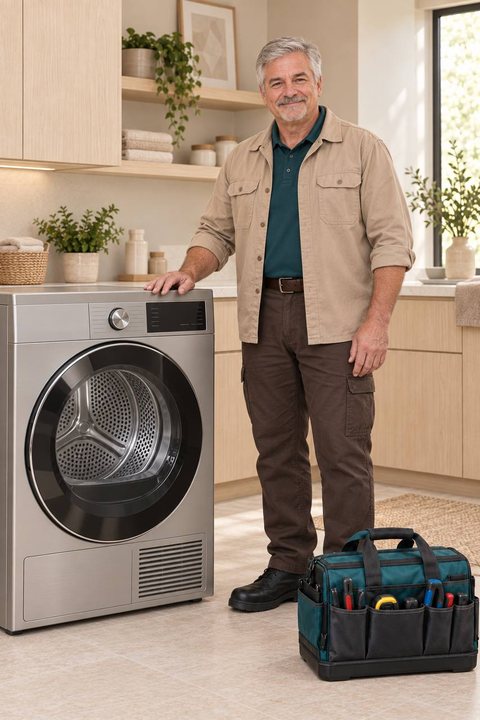
On the truck

The machines behind the guide

Fix guide

What is happening

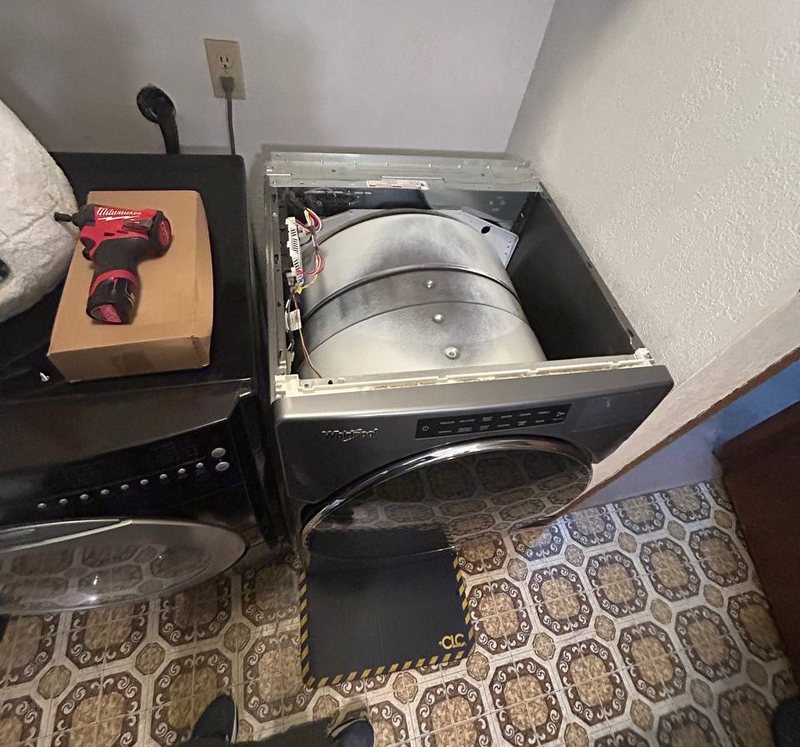
Whirlpool front-load dryer opened up for a drum and belt repair in a west-metro laundry room
LG dryer d80 / d90 / d95: the airflow codes

Every recent LG dryer carries a pressure sensor on the blower housing. During the first minutes of a cycle it compares the pressure inside the exhaust to what a clear duct should show. Lint, a crushed elbow or a stuck exterior flap raises that pressure, and the display translates the difference into a percentage: d80 means four-fifths of the airflow is gone, d90 and d95 mean the duct is nearly shut. The dryer keeps running but takes far longer, since moist air has nowhere to go. Behind the code, the high-limit thermostat is cycling the heater to keep the drum from overheating, which is how heating elements, gas valve coils and thermal fuses wear out early.

Minnesota winters make this an LG code we see from November through March. The exterior flap on a north-facing wall ices shut after a wet snow, and frost cakes onto the lint already inside the duct until a four-inch pipe is carrying air through a slot. Second-floor laundry rooms in Chanhassen and the newer parts of Eden Prairie often exhaust through the roof, so the run is long, has several elbows, and ends in a cap nobody has seen up close since the house was built. Older Minneapolis bungalows near Lake Harriet have the opposite problem: a basement dryer venting through a foil hose that sags and collects lint at every low point.

Symptom by symptom

What you noticeWhat is really happeningSafe to check yourself?What we do
d80 for the first time, clothes still dryThe duct has crossed the 80 percent mark; the sensor caught it earlyYes. Clean the lint screen and look at the outside hoodClean the full run from dryer to hood and confirm the flap opens without catching
d90 or d95 on every cycleThe exhaust is nearly closed; the heater is cycling on the high-limitYes. Stop using the dryer until the vent is clearedClear the duct, replace crushed transition hose, test static pressure
Code appears only in the coldest weeksThe exterior flap has frozen shut or the hood is buried in a snowdriftYes. Look at the hood from outside, from the groundLoosen the flap, fit a hood that resists icing, check for frost inside the duct
No code, but towels take two cyclesRestriction sits below the alarm threshold, or the sensor itself has driftedYes. Time a load of towels and note itMeasure airflow, test the sensor and the heater, and clean the duct
Code plus a hot cabinet or burnt smellLint has reached the heater box or the blower wheel is packedNo. Turn the dryer off and leave it offOpen the dryer, clear the blower and heater, replace the thermal fuse if it opened
d80 after a new dryer was installedThe transition hose behind the machine is crushed against the wallYes. Pull the dryer forward a few inches and rerunReplace the foil hose with rigid or semi-rigid duct and set a proper offset

What you can safely do yourself

  • Clean the lint screen before every load and wash it when water beads on the mesh.
  • Walk outside and confirm the exhaust flap opens while the dryer is running.
  • After a snowstorm, brush the drift away from a low wall hood before starting a load.
  • Pull the dryer forward and look for a flattened foil hose behind it.
  • Run the dryer’s own Flow Sense check from an empty drum and note the reading.
  • Write down how long a towel load takes now so you have a baseline.

When it is time to call

A single d80 after you clean the screen and clear the flap is a nudge; the dryer will keep working. Call when d90 or d95 comes back within a load or two of a cleaning, when the code appears with a hot cabinet or a scorched smell, or when the run goes through a roof or a finished ceiling you can’t inspect. A vent that stays restricted overheats the heater, opens the thermal fuse and shortens the motor’s life, and packed lint near a heater is a fire risk. We clear the vent, then test the dryer’s heat and airflow with a meter so the code stays gone.

One written number for the LG dryer, with the $99 diagnostic already inside it; if you stop after the diagnosis, $99 is all you pay. The repair comes with a written warranty. Request service →

Questions

What do d80, d90 and d95 mean on an LG dryer?

They are airflow warnings from LG’s Flow Sense system, and the number is the percentage of the exhaust the dryer believes is blocked. Some newer models also show d75 as a first warning. The codes do not stop the cycle. They appear at the end and stay on the display until a cycle runs with normal pressure, which is why cleaning the lint screen alone rarely clears them.

Can I keep using my LG dryer with a d90 code?

You can, but you should not for long. At 90 percent restriction the dryer is running its heater against a thermostat that keeps tripping, loads take twice as long, and lint is accumulating in a duct that is already warm. Treat d90 and d95 as a reason to clean the vent this week, and stop using the machine at once if you smell anything scorched.

Why does the LG code show up in winter and disappear in spring?

Because the restriction is outside. A hood flap frozen shut, a drift against a low wall vent or frost bonded to lint in a cold attic run all raise the back-pressure the sensor reads. When the thaw comes, the pressure drops and the code goes quiet, but the lint that caught the frost is still there. West-metro houses with roof vents see this most.

Does Loon clean dryer vents in Eden Prairie and the west metro, or only repair the dryer?

Both, and on the same visit. When an LG shows an airflow code we clear the duct from the dryer to the outside hood, replace a crushed transition hose if there is one, and then test the machine’s heat and airflow with a meter. A dryer that has been running hot for months often needs a thermal fuse or a cycling thermostat as well, and we tell you if that is the case.

Could the Flow Sense sensor itself be wrong?

Occasionally. The sensor is a small pressure switch on the blower housing, and lint or a split hose to it will produce a code on a clean duct. Just as often a bad sensor stays silent while the vent is shut, which is why we measure airflow at the hood rather than trusting the display. If the duct measures clear and the code persists, the sensor is tested and replaced.

More guides

Dryer Repair — the full page →

How a visit goes

Four steps from broken to tested

1

Reach out

Call (763) 342-9995 or send the form. You get a callback with a real arrival window, and a text when the truck is on its way.

2

Diagnosis with a meter

The technician tests the machine, names the failed part in plain words, and writes one flat price. The $99 is already inside it.

3

Repair from the truck

We stock the parts that actually fail in west-metro homes, so most jobs close the same visit; an ordered part comes back with no second trip fee.

4

Tested, tidy, in writing

Full test cycle before we pack up, a clean work area after, and a written warranty on the invoice.

LG dryer d80 / d90 / d95: the airflow codes: one call, one written number.

One call starts it: $99 finds the fault, one written number, repair from the truck, written warranty.

Online Request service 📞