Also on the truck · Minneapolis
The rest of the lineup
Same $99 diagnostic, same written price, same written warranty on every machine we fix in Minneapolis.
An inch of water left in a Linden Hills dishwasher, glasses coming out cloudy in Kingfield, a control panel that lights up and does nothing.
Mon–Fri 8am–6pm · Sat 9am–3pm · Eden Prairie-based, no mileage charge inside 30 minutes
Same $99 diagnostic, same written price, same written warranty on every machine we fix in Minneapolis.
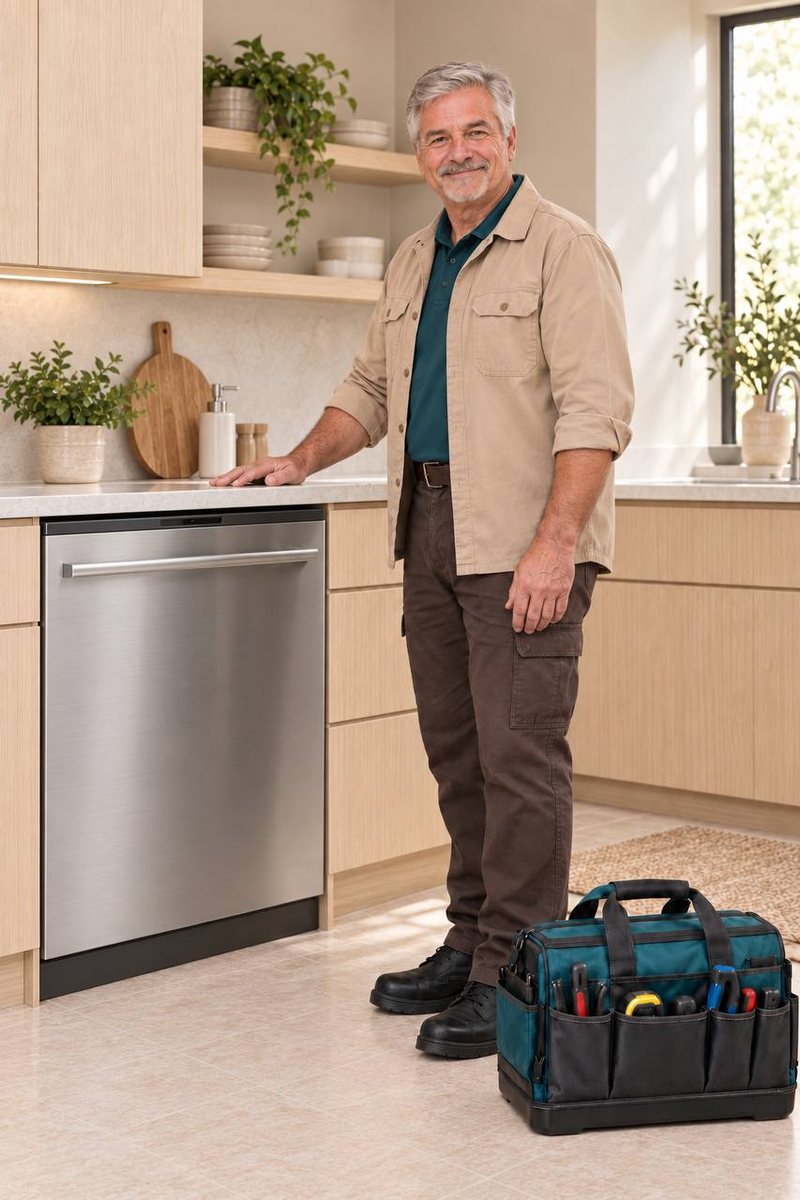
White film on the glassware means something different in Minneapolis than it does in the suburbs. In Edina or Eden Prairie it nearly always means the softener ran out of salt. In Fulton, Lynnhurst or Kenny, where houses drink Mississippi River water softened at the city plant, there usually is no softener, and the water arrives only moderately hard. So when a dishwasher there starts leaving film, we look at the heater, the rinse-aid dispenser and the wash arm instead of the salt bin. The distinction saves you a repair you do not need. We reach these blocks from Eden Prairie along the Crosstown and up Penn, or by Hwy 100 and 50th Street into Fulton and Linden Hills.
The other Minneapolis signature is the retrofit. A 1925 Craftsman kitchen was not built with a dishwasher opening, so the one you have was cut in beside the sink sometime between 1978 and last year, often into a cabinet base that is an inch too shallow. Drain hoses run uphill around a garbage disposal that replaced the original trap, wiring comes off a shared circuit, and the door springs were never adjusted for a panel front. Those installation details cause a surprising share of the drain, leak and latch complaints we see around Lake Harriet, and fixing them properly is part of the repair, not an extra.
A drain pump that has quit or a check valve stuck with a shard of glass, and in retrofit kitchens a drain hose without a high loop so dirty sink water flows back. We clear the sump, test the pump windings, and rehang the hose the way it should have been in the first place.
On Minneapolis water this is rarely a softener issue. We test the heating element, since a heater that reads open cannot bring water hot enough to dissolve detergent, then check the rinse-aid dispenser and the spray-arm holes for grit. If the film wipes off with vinegar, it is mineral; if not, it is etching, and that is a detergent conversation.
Blocked spray arms, a wash motor with a failed capacitor, or a chopper jammed with a label. We pull the lower arm, run the wash motor under load, and watch pressure with the door propped and the interlock bypassed. A weak motor shows on the meter well before it stops turning.
Usually a door latch that no longer trips the microswitch, especially on panel-ready doors in Tangletown remodels where the cabinet front adds weight. Sometimes a control board or a shorted touchpad. We test the latch switch first because it is cheap and common, and go to the board only when the meter says so.
A door gasket flattened by age, a spray arm throwing water at the door seam, or a pump seal weeping under the tub. Old maple floors in Kingfield show water quickly. We run a full cycle with the toe kick off and a light underneath until we see the actual source, then fix that and nothing else.
Bosch E24 and E25, Whirlpool F-codes, Samsung and LG letter codes all point at a subsystem rather than a part. We read the code, then verify it: an E24 means the machine could not drain, but whether that is a pump, a check valve or a kinked hose behind the cabinet is decided by testing, not by the code.
The visit starts with a look under the sink, because in a retrofit kitchen half the dishwasher problems begin there: a drain hose with no high loop, a disposal knockout never removed, a saddle valve barely open on the supply. Then the toe kick comes off and the meter goes on. Inlet valve coil, heating element, drain pump, wash motor, float switch, door latch: each is read against what a working part should show. We run a short cycle with the door interlock bypassed and watch spray pattern, water temperature and drain timing. In a Lynnhurst kitchen with a panel-front Bosch or a Fulton kitchen with a builder-grade Frigidaire, the method is identical, and the readings go on the ticket where you can see them.
Bosch and KitchenAid dominate the remodeled kitchens around Lake Harriet and Minnehaha Parkway; Whirlpool, Frigidaire, GE and Samsung fill the rest, with Miele appearing in the larger Tudors. In the Uptown rental buildings a dishwasher that stops draining becomes a tenant complaint within a day, so we schedule with the tenant, send the written figure to the owner or manager by text, and email the invoice and warranty when the machine has passed a full cycle. The terms for dishwasher repair in Minneapolis are the same on every ticket. The $99 diagnostic is folded into the repair you approve, and all pricing is set after the diagnostic, in writing.
Probably not. Minneapolis city water is softened at the plant and arrives moderately hard, well below what suburban wells deliver. Film here is more often a heater that is not reaching temperature, a clogged rinse-aid dispenser or too much detergent. We test the heater and dispenser before anyone talks about softeners, and a vinegar wipe tells us whether the film is mineral or etching.
Look under the sink. Retrofitted dishwashers in Fulton and Kingfield often drain into a disposal through a hose with no high loop, so sink water flows back into the tub and glass fragments reach the check valve. We fix the routing, clear the sump and pump, and test drain timing, so the fix addresses the cause and not just the puddle.
Yes. Bosch, Miele, KitchenAid and Thermador panel-ready units are common in remodeled Linden Hills and Tangletown kitchens. Removing and reinstalling a custom panel is part of the repair, and we adjust the door springs afterward so the heavier door latches cleanly, since a latch that does not fully close is the reason many of them stop starting.
Often yes. A drain pump, a latch, a heating element or a gasket on an otherwise sound machine is a reasonable repair at ten years. A cracked tub, a failed main board on a discontinued model or a rusted rack system is a different conversation, and we will have it before writing a price so you can decide with the facts in front of you.
We test the dishwasher, name the failed part in plain words and write one price. If you approve, the $99 is already inside that number rather than added on top. If you decide not to repair, $99 is your entire bill. There is no separate trip charge, no mileage fee for Minneapolis, and no price given until the diagnosis is finished.
What is happening, what is safe to check, when to call
Read the guide →What is happening, what is safe to check, when to call
Read the guide →Call (763) 342-9995 or send the form. You get a callback with a real arrival window, and a text when the truck is on its way.
The technician tests the machine, names the failed part in plain words, and writes one flat price. The $99 is already inside it.
We stock the parts that actually fail in west-metro homes, so most jobs close the same visit; an ordered part comes back with no second trip fee.
Full test cycle before we pack up, a clean work area after, and a written warranty on the invoice.
One call starts it: $99 finds the fault, one written number, repair from the truck, written warranty.