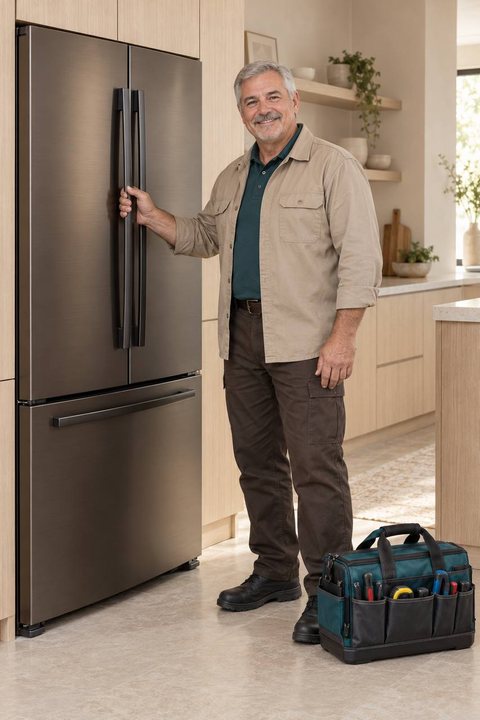
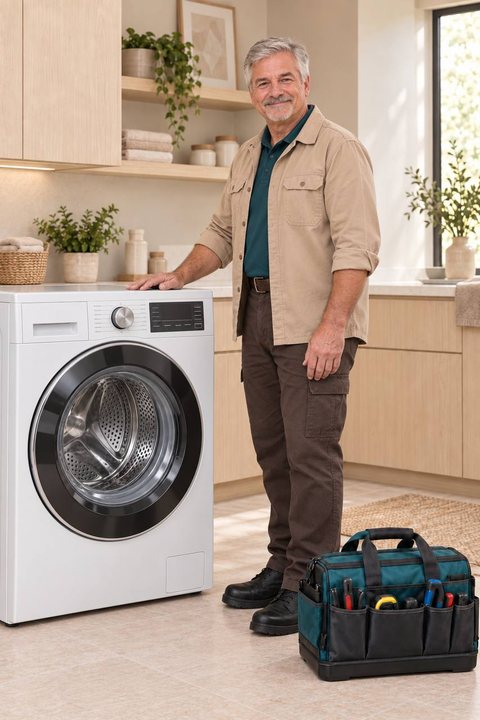
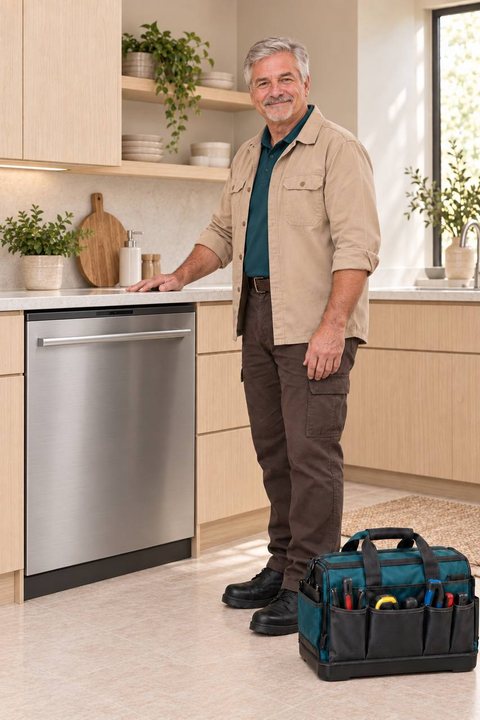
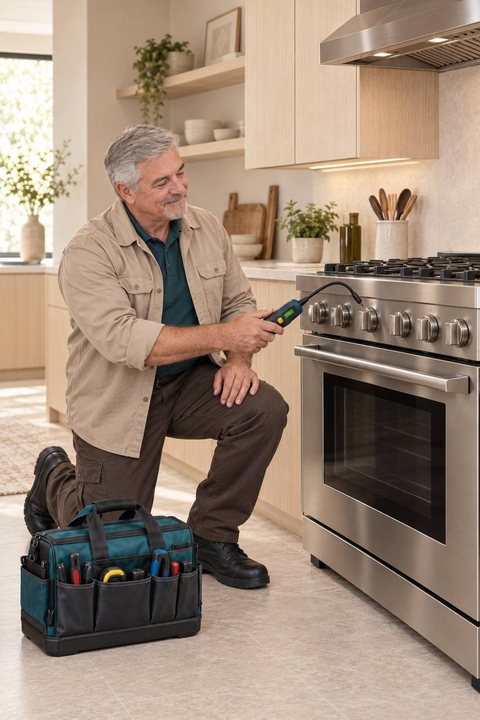
Also on the truck · Minneapolis
The rest of the lineup
Same $99 diagnostic, same written price, same written warranty on every machine we fix in Minneapolis.
Towels still damp after an hour in a Tangletown basement, a gas dryer that clicks but never lights in Armatage, a drum thumping under a Linden Hills kitchen.
Mon–Fri 8am–6pm · Sat 9am–3pm · Eden Prairie-based, no mileage charge inside 30 minutes
Same $99 diagnostic, same written price, same written warranty on every machine we fix in Minneapolis.
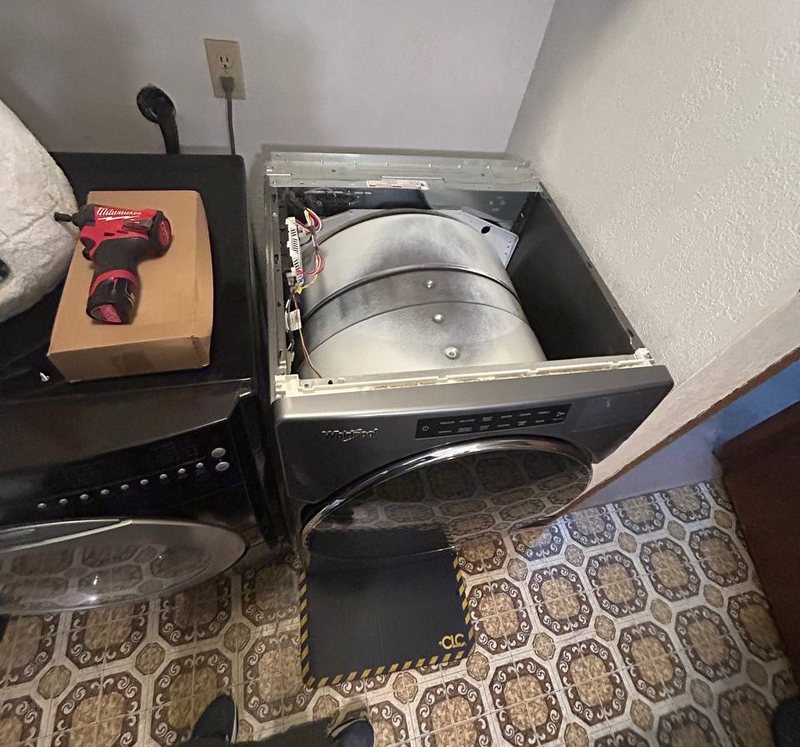
A dryer in a 1920s Tudor near Minnehaha Creek exhausts through a wall that was never designed for it. Someone in the seventies bored a hole through the limestone or the rim joist, ran flexible duct to a flap on the side of the house, and it has been catching lint and frost ever since. That single fact drives most of the dryer calls we take in Kenny, Armatage, Fulton and Lynnhurst. In February the flap ices shut, the lint behind it freezes into a plug, and a perfectly good dryer starts taking two cycles a load. By March someone calls us convinced the heating element is gone. Sometimes it is; often the meter says otherwise.
Gas dryers outnumber electric ones on this side of the city, because the gas line was already in the basement and the 240-volt circuit was not. That changes what fails. Igniters that glow then fade, flame sensors that open on a warm day, coils on the gas valve that hold for the first cycle and quit on the second. Electric dryers in the Uptown rental stock fail differently, with thermal fuses and elements, and they fail more often when a landlord’s vent run climbs three floors through a converted duplex. Both kinds of machine get the same visit: a meter, a vent pressure check, and one written number.
Electric: a thermal fuse, heating element or high-limit thermostat reading open. Gas: an igniter, flame sensor or gas valve coil. The meter sorts it out in a few readings. We also check the vent, because a blocked run trips the very fuse we just replaced within a month in a Fulton basement.
The dryer is probably fine and the exhaust is not. We measure airflow at the exit flap, pull the transition duct, and clear the frost-caked lint that builds in Minneapolis vents from November on. If the element or coil is weak, the meter shows it, and we replace both the part and the blockage that killed it.
Drum rollers with flat spots, a glazed idler pulley, or drum glides worn through to metal. The sound carries straight up through the floor joists of a Kingfield bungalow. We replace the worn kit as a set, so you are not calling back in six weeks for the roller we left in.
The igniter glows, the gas valve coils should open, and if they are weak the flame never comes. Coils are a truck part and fail on Whirlpool, Maytag and Kenmore gas dryers with real regularity. We test the igniter, the coils and the flame sensor and replace only what measures out of range.
A motor overheating on a seized bearing, or a control that is reading a thermistor wrong. In a hot Uptown top-floor unit in July the motor thermal protector trips sooner. We check motor amps, thermistor resistance and the airflow path before naming the part.
Lint has reached the heater box, or a cycling thermostat has stuck closed and the dryer is running unregulated. Stop using it. We clear the heater housing, test the thermostats and the element, and confirm the vent is moving air before the dryer goes back into service.
The diagnosis follows the heat. On an electric dryer we verify 240 volts at the terminal block, then read continuity through the thermal fuse, the high-limit, the cycling thermostat and the element in order. On a gas machine we watch the igniter, listen for the valve, and measure the coils. The second half of every visit is airflow: a manometer at the vent connection tells us whether the run behind the wall is clear or choked, and in the old houses of Lynnhurst and Linden Hills it is choked more often than not. A repair that ignores the vent is a repair that comes back, so we do not write the price until both halves are known.
Whirlpool, Maytag, Kenmore, GE, LG and Samsung dryers are most of what we see between Lake Harriet and Nicollet Avenue, with Speed Queen in the houses whose owners bought for the long haul and stacked LG and Whirlpool pairs in the Uptown rental buildings. For property managers we coordinate directly: the tenant opens the door, the owner approves the written figure by text, and the invoice and warranty go out by email once the dryer has passed its test cycle. The pricing rule holds for every dryer repair in Minneapolis. The $99 diagnostic is folded into the repair price you approve, and all pricing comes after the diagnostic, in writing.
Cold air and lint conspire. Frost builds on the exit flap and the last few feet of duct, lint sticks to the frost, and airflow drops until the dryer cannot shed moisture. Older houses in Armatage and Kenny with long basement vent runs suffer most. Clearing the run restores the cycle time; if the element or coils have weakened from running hot, the meter finds that too.
Both, and in Minneapolis gas is the majority. We test igniters, flame sensors, gas valve coils and thermal fuses on gas machines, and elements, fuses and thermostats on electric ones. Any work on the gas side is checked for leaks with a detector before we leave, and the dryer runs two full cycles under observation.
Yes, and we do it on every visit whether or not the vent is the complaint. We measure airflow at the connection, inspect the transition duct, and clear what we can reach. If the run through the foundation is crushed, undersized or made of plastic, we will tell you plainly and describe what a proper rigid run would look like.
For a day or two, usually. A squeal is a roller, idler pulley or glide wearing out, not a fire risk in itself. A thump that grows or a burnt smell is different, and we would rather you stop using it. Either way, worn drum hardware is a truck-stock repair we finish in one visit on most Whirlpool, Maytag and Kenmore dryers.
You will know before we start, in writing. The $99 diagnosis comes first, and if you approve the repair that $99 is already inside the price on the ticket. Decline, and $99 is the whole charge. We do not publish repair prices because a cold dryer can be a fuse or a control board, and only the meter knows which one you have.
What is happening, what is safe to check, when to call
Read the guide →What is happening, what is safe to check, when to call
Read the guide →Call (763) 342-9995 or send the form. You get a callback with a real arrival window, and a text when the truck is on its way.
The technician tests the machine, names the failed part in plain words, and writes one flat price. The $99 is already inside it.
We stock the parts that actually fail in west-metro homes, so most jobs close the same visit; an ordered part comes back with no second trip fee.
Full test cycle before we pack up, a clean work area after, and a written warranty on the invoice.
One call starts it: $99 finds the fault, one written number, repair from the truck, written warranty.