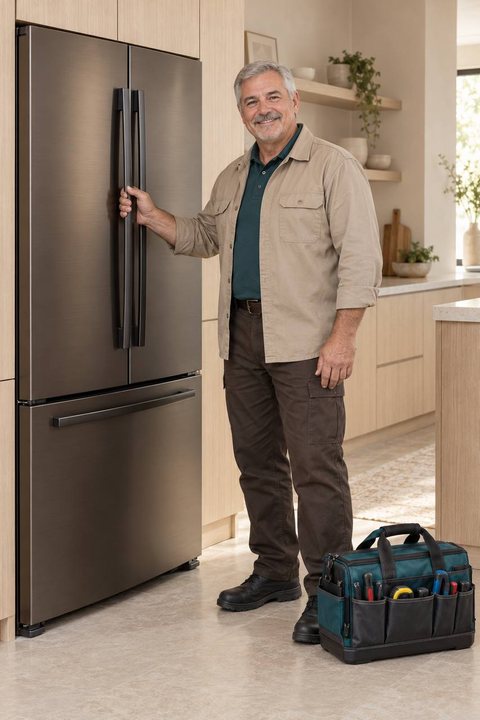
Also on the truck · Minneapolis
The rest of the lineup
Same $99 diagnostic, same written price, same written warranty on every machine we fix in Minneapolis.
An empty ice bin in Linden Hills, hollow cloudy cubes in Kingfield, a fill tube frozen solid in an Armatage back porch.
Mon–Fri 8am–6pm · Sat 9am–3pm · Eden Prairie-based, no mileage charge inside 30 minutes
Same $99 diagnostic, same written price, same written warranty on every machine we fix in Minneapolis.
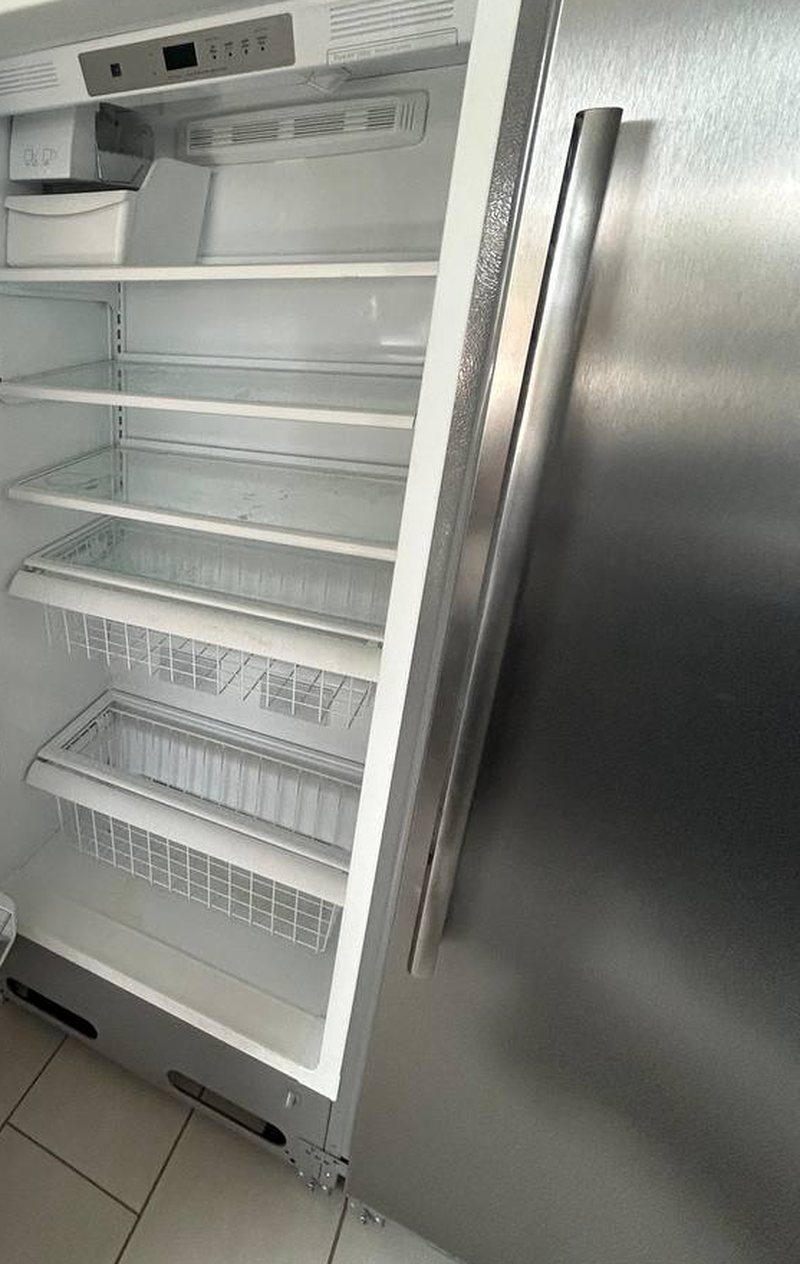
Follow the water line behind a refrigerator in a Fulton bungalow and you learn something about the house. It usually starts at a saddle valve tapped into a copper pipe under the kitchen floor in 1994, runs through a cold joist bay, and arrives at the fridge as a quarter-inch plastic tube with a kink or two. That line, not the ice maker itself, is the first thing we check on any Minneapolis ice call. We drive in from Eden Prairie by way of Hwy 62 and Penn Avenue for Kenny, Armatage and Lynnhurst, or Hwy 100 and 50th Street for Fulton and Linden Hills, and the truck carries valves, tubing and modules for the common brands.
Minneapolis has an advantage here that the suburbs do not: city water from the Mississippi, softened at the plant, arrives moderately hard, so fill valves and fill tubes scale up more slowly than they do on the very hard well water in Edina or Eden Prairie. The ice-maker problems we see near Lake Harriet lean toward cold and plumbing instead. A fill tube that freezes because the refrigerator sits against an uninsulated exterior wall. A saddle valve that has closed itself with corrosion. A door-mounted ice maker in a French-door unit whose heater has failed, so the tray freezes to the mold. Different causes, same method: test, name, write, fix.
We check the arm or sensor first, then run a test harvest. If the module cycles but no water arrives, the fill valve, the line or the saddle valve is at fault; if nothing cycles, the module or control has stopped. On Minneapolis water a corroded saddle valve under the floor is a frequent answer.
Not enough water reaching the mold in the fill window. On well water that is scale; on city water it is more often low pressure from a half-closed saddle valve, a kinked tube behind the fridge, or a fill valve whose coil has weakened. We measure fill volume into a cup, then test the valve and the line pressure.
Cold air from the freezer creeping up the tube, a fill valve that dribbles after closing, or a fridge parked against an exterior wall in an Armatage back porch. We thaw the tube, test the valve for full shutoff, check the tube heater where one exists, and reroute or insulate the line so the freeze does not return in January.
Old filter, a plastic fill line that has absorbed odors, or ice sitting in the bin for weeks in a lightly used freezer. We replace the filter if due, flush the line, and check the mold for mineral crust. A line that has been in place since the nineties usually gets replaced with fresh tubing.
A fill valve that no longer closes tightly, or a module whose fill timing has drifted. Water floods the mold, freezes over the edge, and welds the tray to the housing. We test the valve for seep, replace it if it leaks, and calibrate or replace the module so each cycle delivers the right amount.
On French-door refrigerators the ice compartment in the door has its own small heater and duct. When the heater fails or the door gasket leaks warm air, the chute frosts shut and the auger stalls. We test the heater and the auger motor, replace the failed piece, and check the gasket that let the humidity in.
Every ice maker is a small machine that depends on a bigger one and a plumbing line, so the diagnosis follows the water. We confirm the supply is open and delivering pressure, then force a harvest cycle and watch: does the mold thermostat close, does the motor turn, does the valve open, does water arrive, and how much. A measuring cup at the fill tube tells us more than any error code. Then the meter reads the valve coil, the module’s motor and the mold heater. In the older refrigerators of Kingfield and Tangletown we also check freezer temperature, because an ice maker in a compartment running at fifteen degrees will not harvest no matter how healthy its parts are.
Whirlpool, Kenmore, GE, Frigidaire, Samsung and LG refrigerators supply most of the ice-maker work between Minnehaha Creek and Uptown, with KitchenAid and Sub-Zero built-ins in the larger houses toward Lake Harriet. Samsung and LG door-mounted units have their own well-known habits, and we carry the heaters and auger parts they need. In rental buildings a jammed dispenser is a low-priority complaint until the water line behind it leaks onto a downstairs ceiling, so we take those calls promptly and handle approval by text with the owner. As with every repair, the $99 diagnostic is folded into the ice maker repair you approve, and all pricing comes after the diagnostic, in writing.
Much less. Minneapolis draws from the Mississippi and softens it at the plant, so it arrives moderately hard rather than at the fifteen to twenty-five grains common in Eden Prairie or Bloomington wells. Fill valves and tubes last longer on it. Our Minneapolis ice-maker calls are more often about frozen lines, corroded saddle valves and failed modules than about scale.
The fill tube or the water line is freezing. Refrigerators pushed against an exterior wall in an old porch or breezeway, or lines run through an uninsulated joist bay, get cold enough in January to freeze the trickle of water sitting in them. We thaw, test the valve for a dribble that feeds the ice plug, and insulate or reroute the line.
No. We repair the ice makers built into refrigerators and freezers, including door-mounted units and the modules in bottom-freezer and side-by-side models. Standalone and under-counter ice machines are a different trade with different parts, and we would rather tell you that on the phone than at the door.
We can replace the fill line, the connection at the refrigerator and the shutoff we can reach, and we will tell you when the supply tap itself has failed. A saddle valve corroded shut under a Fulton or Linden Hills floor sometimes needs a plumber to tap a proper valve, and we say so rather than forcing a fix that leaks later.
The module is one of the parts we replace, and it is stocked for Whirlpool, Kenmore and GE. But a new module does nothing if the fill valve is weak, the line is kinked or the freezer runs warm, which is why we test the whole chain first. The $99 diagnostic tells you which piece actually failed before you spend anything on parts.
Call (763) 342-9995 or send the form. You get a callback with a real arrival window, and a text when the truck is on its way.
The technician tests the machine, names the failed part in plain words, and writes one flat price. The $99 is already inside it.
We stock the parts that actually fail in west-metro homes, so most jobs close the same visit; an ordered part comes back with no second trip fee.
Full test cycle before we pack up, a clean work area after, and a written warranty on the invoice.
One call starts it: $99 finds the fault, one written number, repair from the truck, written warranty.