Also on the truck · Chanhassen
The rest of the lineup
Same $99 diagnostic, same written price, same written warranty on every machine we fix in Chanhassen.
Glasses come out of a Chanhassen dishwasher with a white haze and the bottom rack sits in an inch of water: well water is half of every call here.
Mon–Fri 8am–6pm · Sat 9am–3pm · Eden Prairie-based, no mileage charge inside 30 minutes
Same $99 diagnostic, same written price, same written warranty on every machine we fix in Chanhassen.
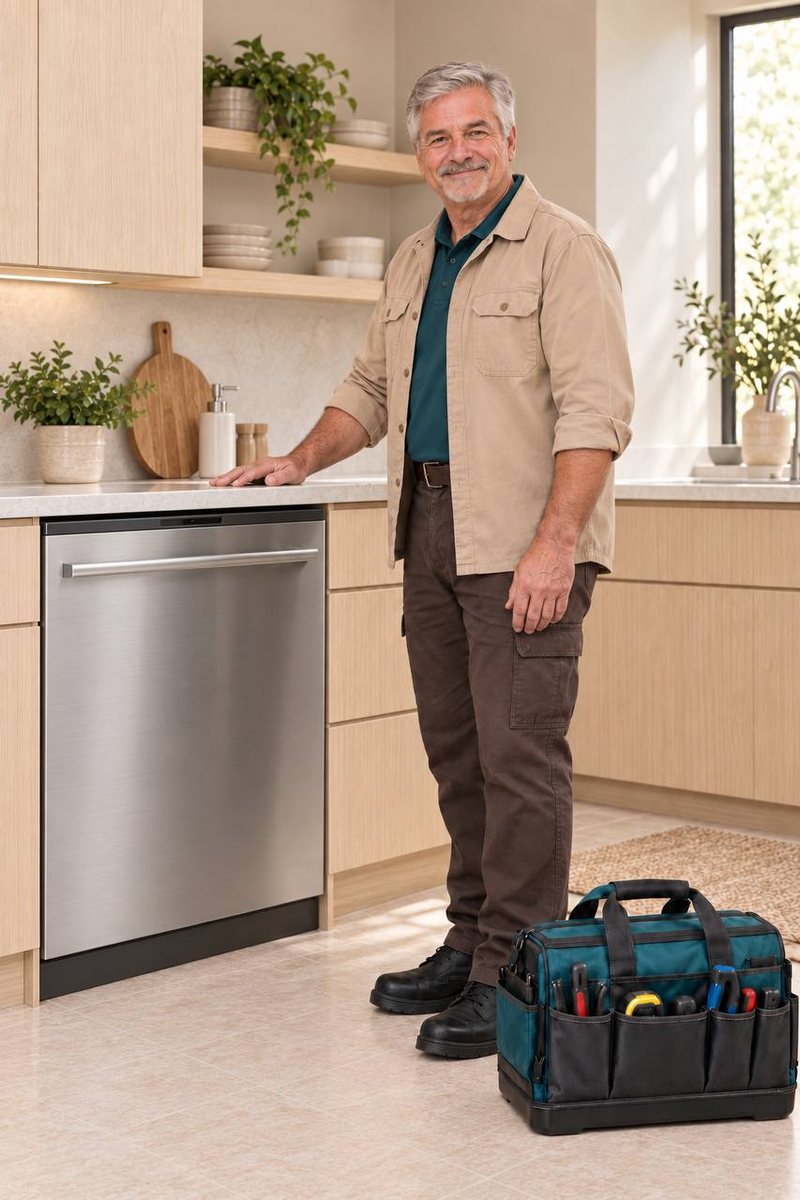
Chanhassen’s municipal wells deliver some of the hardest water on our route, and a handful of houses on the western edge toward Lake Minnewashta and Hwy 41 are still on private wells that run harder still. Every house built here since the 1990s came with a softener in the utility room, and every dishwasher call we take starts with a question about it. When the salt runs out or a plumber leaves the bypass open during a water heater swap, the dishwasher is the first appliance to complain. Glasses cloud within a month. The heating element grows a grey shell. None of that is the machine’s fault, but the machine is what we are called to fix.
A common scene off Powers Blvd: a 2004 kitchen with the builder’s Whirlpool, replaced in 2018 by a Bosch that was supposed to be quiet and last forever. Four years later the glasses are etched, the Bosch shows E24, and the owner has tried three brands of rinse aid. We pull the toe kick, find a drain pump full of scale flakes shed from the heater, and a brine tank downstairs that has been empty since summer. The pump gets replaced, the tub gets descaled, and the salt gets mentioned. Iron staining from the wells on some streets gets the same approach: fix the machine, then be plain about the water.
A drain pump jammed with scale flakes or glass, a check valve stuck shut, a packed filter, or a disposal knockout plug left in after a remodel. We test the pump directly, clear the drain route, and confirm the hose has a high loop. Bosch E24 and E25 codes point straight here.
Etching from hard water and too much detergent, on top of ordinary scale. We descale the heater and the arms, test the heater circuit and the rinse-aid dispenser, and measure hardness at the tap. Above fifteen grains without a working softener, the haze will return, and we say so.
Spray arm holes narrowed by mineral, a circulation pump losing pressure, a torn sump seal, or an inlet valve so scaled that the tub never fills to the line. We measure fill volume and water temperature and run a cycle with the interlock bypassed to see what the arms are doing.
Door latch or switch, a touch panel that no longer reads, a thermal fuse on older Whirlpool and KitchenAid models, or a tripped GFCI or breaker feeding the junction box. We check power first and meter the latch and control after. A latch is replaced on the spot.
A flattened door gasket, a spray arm striking the door vent, a pump seal weeping, or a float switch stuck so the tub overfills. We run a full fill with the toe kick off and a light on the floor. Chanhassen kitchens have a lot of wood flooring, so this gets a prompt window.
Iron from the well water, baked on by the heating element. The dishwasher is not rusting, and we confirm that from inside. We clean the tub and the racks and explain what an iron filter or a properly regenerating softener would change, because no cleaner keeps up with the source.
We start at the sink with a hardness strip and a look at the softener, because a reading over twenty grains tells us what we will find inside the machine before the toe kick is off. Then the dishwasher runs while we watch the inlet valve, time the fill, listen to the circulation pump under load, and meter the heater when the cycle calls for it. The filter and sump are pulled and examined. A drain complaint sends us along the hose to the disposal or air gap and puts the pump under direct test. We name the failed component plainly and write a single price. You approve before anything is changed, and most Chanhassen dishwashers finish the same visit.
Bosch, KitchenAid and Whirlpool are the dishwashers we open most in Chanhassen, followed by GE, Samsung, LG, Frigidaire and Maytag, with Miele and Thermador in the larger houses on Lotus Lake and Lake Minnewashta. Townhome owners along Hwy 101 and landlords near downtown and West 78th St can have the tenant host, approve the written number by text, and get the invoice and written warranty by email. The $99 diagnostic is folded into the repair price when you approve it; decline and $99 is all you pay. No number is given before the machine is tested, and every number is in writing.
Chanhassen’s well water is among the hardest in the west metro, and a lapsed softener lets all of it into the dishwasher. We test hardness at the tap and check whether the softener is regenerating. The machine can be descaled and repaired; keeping it that way depends on salt in the brine tank and rinse aid in the dispenser.
Often yes, when the fault is a pump, valve, latch or heater, all of which are repairable and mostly on the truck. If the tub is cracked or a control board for an older model is no longer made, we say so after the $99 diagnostic and leave the decision with you.
Drain faults. E24 is usually a blocked, kinked or too-long drain path or a packed filter; E25 points at the drain pump or its impeller. In Chanhassen the impeller is often jammed with scale flakes shed from the heater. We clear the path, test the pump, and check the hose route.
No. They are iron from the well water, oxidized and baked on by the heater. We confirm nothing inside the machine is corroding, clean the tub, and explain what an iron filter or a retuned softener would do. Scrubbing without changing the water is a monthly chore that never ends.
We test before we price. The diagnostic is $99, and when you approve the repair that $99 is part of the written number rather than an addition to it. If you decide not to repair, you pay $99 and nothing more. We do not quote repairs over the phone.
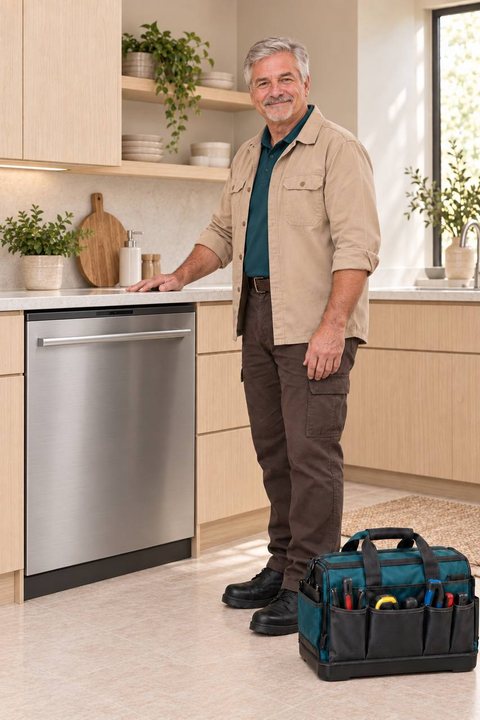
What is happening, what is safe to check, when to call
Read the guide →What is happening, what is safe to check, when to call
Read the guide →Call (763) 342-9995 or send the form. You get a callback with a real arrival window, and a text when the truck is on its way.
The technician tests the machine, names the failed part in plain words, and writes one flat price. The $99 is already inside it.
We stock the parts that actually fail in west-metro homes, so most jobs close the same visit; an ordered part comes back with no second trip fee.
Full test cycle before we pack up, a clean work area after, and a written warranty on the invoice.
One call starts it: $99 finds the fault, one written number, repair from the truck, written warranty.