Also on the truck · Chanhassen
The rest of the lineup
Same $99 diagnostic, same written price, same written warranty on every machine we fix in Chanhassen.
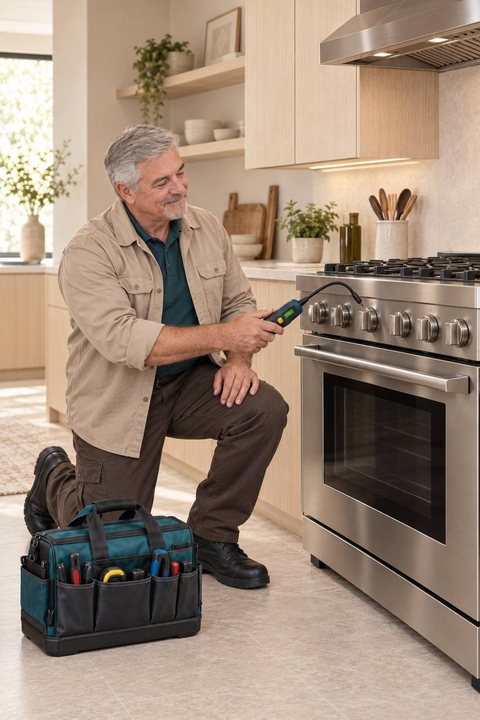
The oven in a Chanhassen kitchen shows 400 and bakes at 320, a glass-top zone has gone dark, or a slide-in gas range clicks and clicks: we measure igniter current, element resistance and sensor readings, name the failed part, and write one price before repair.
Mon–Fri 8am–6pm · Sat 9am–3pm · Eden Prairie-based, no mileage charge inside 30 minutes
Same $99 diagnostic, same written price, same written warranty on every machine we fix in Chanhassen.
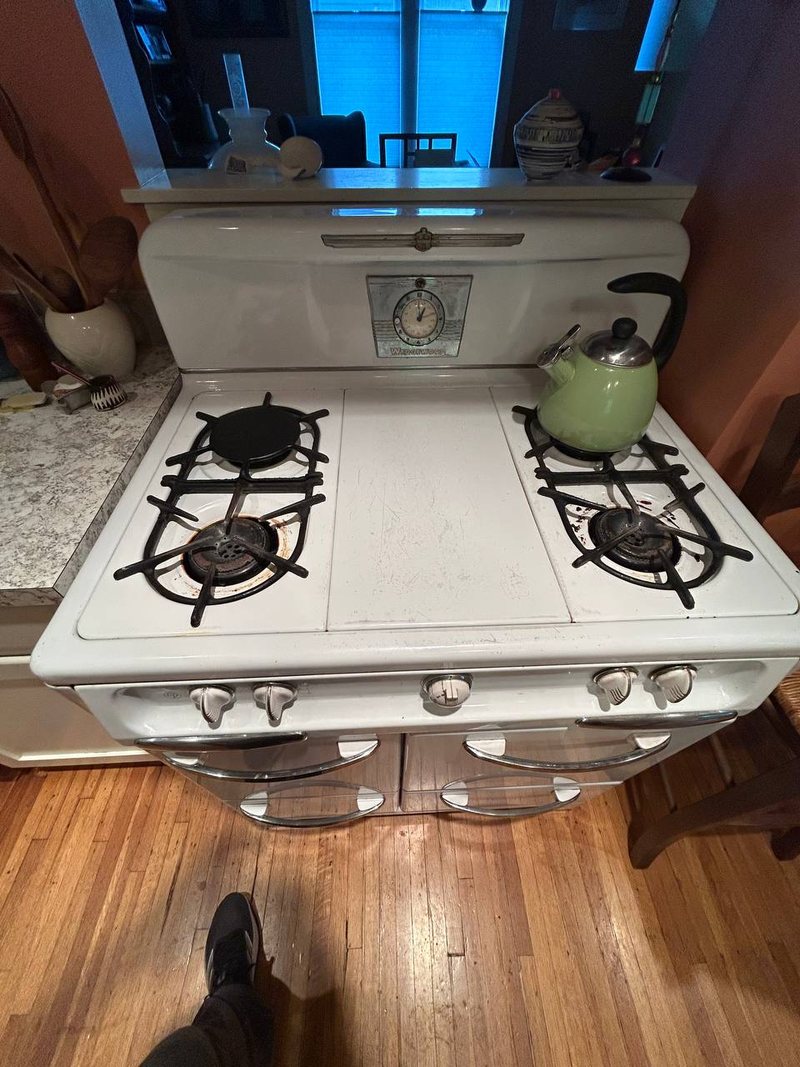
Chanhassen’s subdivisions went up with a builder package: a freestanding electric coil-top or glass-top from Whirlpool, GE or Frigidaire, matched to the dishwasher and the microwave. Twenty years on, many of those kitchens have been redone, and the range is now a slide-in gas Samsung or LG, a KitchenAid dual-fuel, a Bosch induction, or in the larger houses on Lotus Lake and Lake Minnewashta a Wolf or Thermador with a wall oven from Miele or JennAir beside it. Gas was run to most streets between Galpin Blvd and Powers Blvd, so the switch from electric to gas is common. We come out Hwy 5 with igniters, elements, switches and sensors for both eras.
A representative Chanhassen call: a Sunday roast in a house near Lake Ann, the oven set to 375, the display agreeing, and a thermometer on the rack showing 300. On the original electric oven that is a bake element that has partly failed or a sensor drifting high. On the newer gas slide-in it is a glow-bar igniter that still lights the burner but no longer draws enough current to hold the safety valve open, so the flame drops out every few minutes. Right behind that comes the glass-top with one cold zone, which is a radiant element or the switch behind the knob. All of these are same-visit repairs in most kitchens.
Burner ports plugged by a boil-over, a cracked igniter electrode, or a spark module that has lost one channel. We clean the ports, meter the igniter and the switch, and test the module. If every burner fails to light, we check supply pressure and the regulator before blaming the range.
Gas: an igniter too weak to pull the current the safety valve requires. Electric: a bake element with a break, or an oven sensor reading high so the control cuts heat early. We clamp the igniter during a heat call and read the sensor against a thermometer, then replace whichever is out of range.
F1 through F3 on Whirlpool, KitchenAid, GE and Frigidaire ovens usually mean the sensor, the keypad or a relay; F9-series codes are the door lock. We look up the code for your model, meter the part it names, and verify it before ordering a board, since the board is often not the problem.
An open radiant element under the glass, or an infinite switch with a burnt or welded contact. Stuck on high means the switch. We lift the top, meter both, replace the failed one. Cracked glass from a dropped pan is a different repair and we tell you what it involves.
Pan detection fault, an inverter board that failed on one side, or a cooling fan that stopped so the board shuts itself down. We try a known magnetic pan, check the cooling fan, and pull the diagnostic mode. Boards are ordered and fitted on a return visit with no second trip fee.
The lock motor did not retract as the cavity cooled, the lock switch failed, or a high-limit thermostat tripped during the clean. We release the door, test the lock and the thermostat, and tell you whether this oven should skip self-clean from here on.
Every range gets the same order of work. Supply first: gas pressure and a leak check at the flex connector, or voltage at the terminal block. Then the bake and broil circuits are metered, the glow-bar igniter is clamped for current while the oven calls for heat, and the sensor is read against a thermometer on the rack as the cavity climbs. Each cooktop position is tested at the switch and at the burner or element. Then we name the part in plain words and write one number. For Wolf and Thermador in the lake houses the parts differ but the method is identical, and we carry the common igniters and modules for those lines.
Whirlpool, GE, Frigidaire, Samsung, LG, KitchenAid, Bosch, Maytag and Electrolux ranges fill the Chanhassen calendar, with Wolf, Thermador, Viking, Dacor and JennAir in the larger kitchens toward Lake Minnewashta and Lotus Lake. Owners of rental townhomes along Hwy 101 can have the tenant meet us and approve the written number by text. Our gas work ends at the appliance side of the shutoff; supply piping belongs to a licensed gas fitter. What you pay is a single written number after the diagnostic, and the $99 is already part of it. Decline the repair and $99 is where it ends. Nothing is priced before it has been tested.
Yes. The larger houses on Lotus Lake, Lake Minnewashta and Lake Riley have them, and we service them regularly as an independent shop, not a factory program. Common igniters, spark modules and thermostats for these lines are on the truck; other parts are ordered and fitted with no second trip fee.
On a modern oven it is the sensor probe in the cavity or, on gas, an igniter too weak to hold the valve open through the cycle. We test both against a thermometer. Sometimes only a calibration offset is needed; more often the part is replaced in the same visit.
No. We repair the six machines and do not run gas lines, convert appliances or alter piping. Our gas work stops at the appliance side of the shutoff valve. If you are moving from electric to gas, a licensed gas fitter runs the line, and we are glad to repair the range once it is in place.
Usually. A radiant element or an infinite switch is a same-visit repair on most Whirlpool, GE, Frigidaire and Samsung tops. A cracked glass surface is a bigger job that depends on the model; we write the number after the $99 diagnostic and you decide.
The $99 diagnostic happens before any price. Once the failed part is confirmed with a meter, you receive one written price for the full repair with that $99 already inside it. Nothing is quoted before the oven has been tested, and if you decline, $99 is all you pay.
Call (763) 342-9995 or send the form. You get a callback with a real arrival window, and a text when the truck is on its way.
The technician tests the machine, names the failed part in plain words, and writes one flat price. The $99 is already inside it.
We stock the parts that actually fail in west-metro homes, so most jobs close the same visit; an ordered part comes back with no second trip fee.
Full test cycle before we pack up, a clean work area after, and a written warranty on the invoice.
One call starts it: $99 finds the fault, one written number, repair from the truck, written warranty.