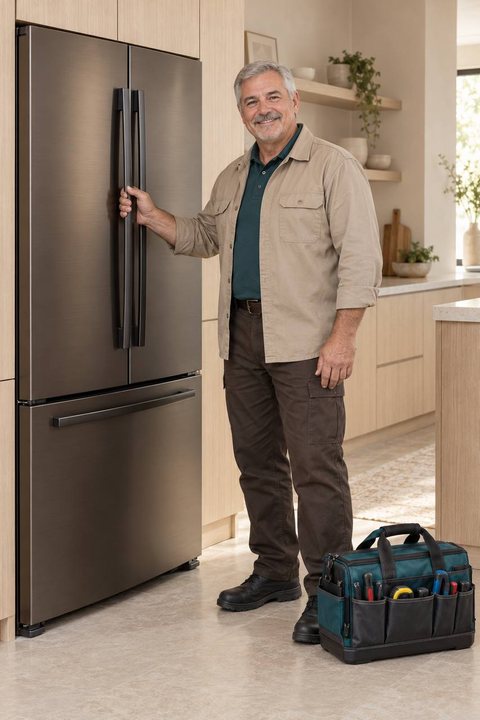
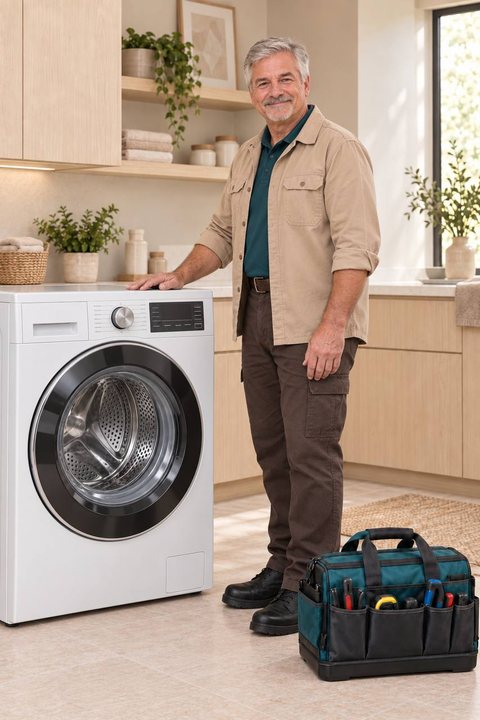
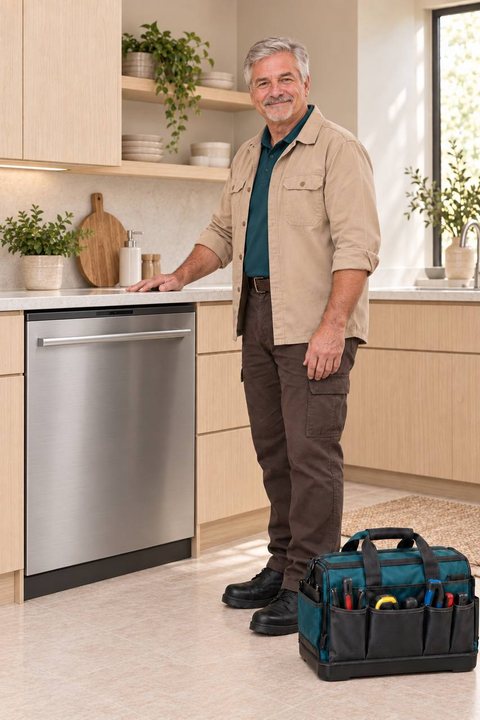
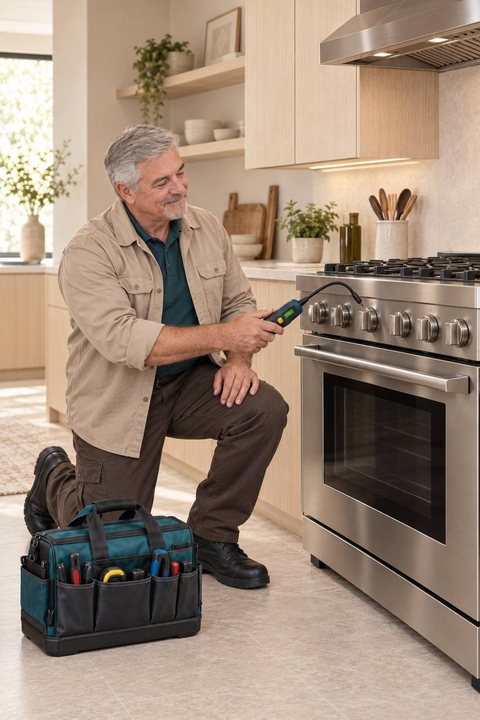
Also on the truck · Chanhassen
The rest of the lineup
Same $99 diagnostic, same written price, same written warranty on every machine we fix in Chanhassen.
In Chanhassen the dryer is upstairs and the vent goes through the roof, so two cycles a load in January is as much about the cap as the coil.
Mon–Fri 8am–6pm · Sat 9am–3pm · Eden Prairie-based, no mileage charge inside 30 minutes
Same $99 diagnostic, same written price, same written warranty on every machine we fix in Chanhassen.
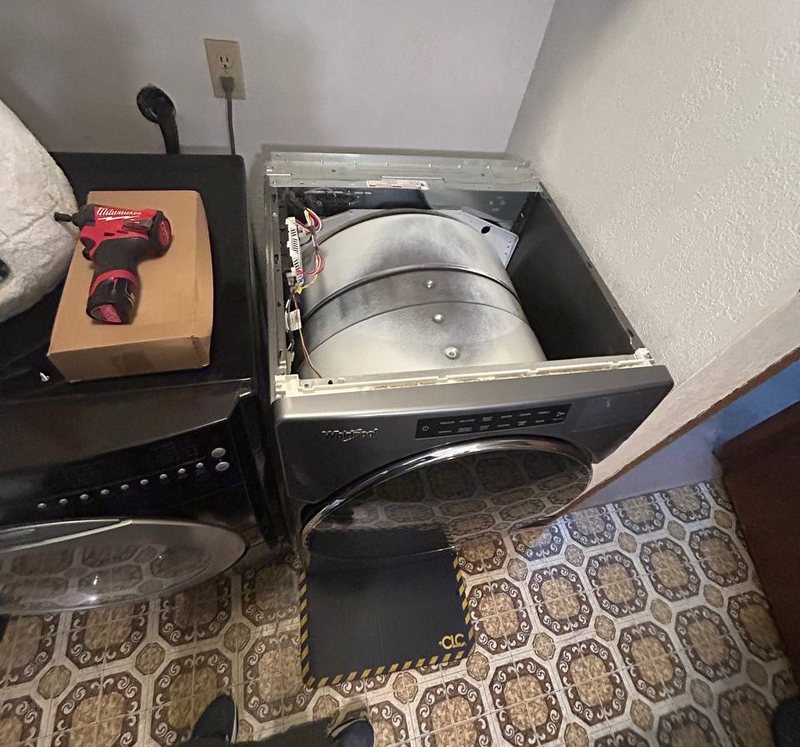
Put the laundry room on the second floor of a two-story and the dryer vent has one way out: up through the attic and out a roof cap. Nearly every subdivision built off Galpin Blvd, Powers Blvd and Lyman Blvd between the mid-1990s and the 2010s did exactly that. The run is often twenty feet of rigid duct through an unheated attic where moist dryer air cools, condenses, and freezes into a lint-and-frost paste in January. The cap’s flapper ices shut on the coldest nights. By the second week of below-zero weather the dryer is fighting for air, and the heat circuit starts protecting itself. We come out Hwy 5 with a manometer and a ladder.
A typical February call from a house near Lake Ann: the dryer runs, the drum turns, and the towels are cool after a full cycle. Inside the cabinet the thermal fuse has opened, which is the dryer’s way of saying the exhaust has been restricted for weeks and the high-limit thermostat has been cycling the heat off early the whole time. Replacing the fuse alone would put us back on the same street in a month. So the vent gets measured, the cap gets looked at, and you get a plain report on both along with the repair. The mudroom dryers off the garage have the opposite problem: a short vent and a cold garage wall.
Electric: heating element open, thermal fuse blown, or a high-limit that failed, and sometimes half of the 240-volt breaker. Gas: igniter, flame sensor or valve coils. We meter the outlet first, then the heat circuit in order. The failed part is almost always on the truck.
Restricted airflow through the roof vent in most Chanhassen houses, a weak element less often, a moisture sensor coated in softener residue occasionally. We measure static pressure at the exhaust, look at the cap, and test the sensor bars. Then we tell you what belongs to the dryer and what belongs to the duct.
Drum rollers worn flat, an idler pulley with a dry bearing, worn glides or a fraying belt. We open the cabinet and turn the drum by hand to place the noise. Rollers, pulleys, glides and belts for Whirlpool, Maytag, GE, LG and Samsung dryers are stocked, so this usually closes in one visit.
Lint built up on the element or the burner housing, or a small item that slipped past the drum seal into the heater box. We pull the drum, clean the heater area and the blower wheel, and check the duct for a lint dam. With the run through the attic, this one gets scheduled quickly.
Door switch, start switch, thermal fuse or a snapped belt tripping the belt switch. We meter from the cord inward until the open circuit shows itself. Most of these take a few minutes to replace once the cabinet is open.
d80, d90, d95 or an HE code means the dryer measured its own exhaust and did not like it. We confirm the restriction with a gauge rather than trust the display, clear what we can reach at the machine, and tell you whether the attic run and roof cap need a full cleaning.
The first stop is the outlet, because a 240-volt circuit with one dead leg looks exactly like a burnt element and costs nothing to find. Then the cabinet comes open and the meter walks the heat circuit: fuse, thermostats, high-limit, then the element or the igniter and its flame sensor. A manometer on the exhaust tells us how hard the dryer is working to breathe, and in a two-story off Pioneer Trail that number is often twice what it should be. We name the failed part, show you the reading on the vent, and write one price. If the vent is why the part failed, you hear that before you decide.
Electric dryers dominate Chanhassen’s subdivisions; gas turns up in the older houses near downtown and in some of the newer construction where a line was run for the range anyway. We repair Whirlpool, Maytag, Kenmore, GE, Samsung, LG, Frigidaire, Electrolux, Bosch and Speed Queen dryers, plus the compact ventless units in the townhomes along Hwy 101. Rental owners can have the tenant host and approve by text, with paperwork by email. Early and late windows are held for shift schedules at Optum and the Shakopee warehouses. Pricing: $99 for the diagnostic, folded into the written repair price you approve; decline, and the $99 is the only charge. Prices are written after testing, never before.
We clear the duct at the dryer and measure the whole run, and we look at the cap from the ground or the ladder. A complete cleaning of a twenty-foot attic run is a separate job we can point you toward. What we always do is tell you whether the vent, not the dryer, is the reason for the problem.
On an electric dryer it is usually the heating element or a thermal fuse that opened after weeks of restricted airflow; on gas, the igniter or the flame sensor. A tripped half of the double breaker does the same thing. We meter each rather than replacing parts in sequence.
Warm, wet dryer air cools as it passes through an unheated attic, condenses on the duct wall, and freezes. Lint sticks to the frost. Over a winter the duct narrows and the cap flap ices shut. A rigid, insulated run with a short path to the cap fares much better than flex duct.
Yes. Early and late windows are held six days a week for shift workers, and Chanhassen is a short drive from the shop, so an eight o’clock arrival or a late-afternoon visit is realistic. Mention the shift when you call.
We start with the $99 diagnostic. After that you receive a single written number for the whole repair, and the $99 is already part of it. We do not price parts before the dryer has been tested. If you decide against the repair, $99 is the complete bill.
What is happening, what is safe to check, when to call
Read the guide →What is happening, what is safe to check, when to call
Read the guide →Call (763) 342-9995 or send the form. You get a callback with a real arrival window, and a text when the truck is on its way.
The technician tests the machine, names the failed part in plain words, and writes one flat price. The $99 is already inside it.
We stock the parts that actually fail in west-metro homes, so most jobs close the same visit; an ordered part comes back with no second trip fee.
Full test cycle before we pack up, a clean work area after, and a written warranty on the invoice.
One call starts it: $99 finds the fault, one written number, repair from the truck, written warranty.